Driveway Stone Pavers Make an Impression and Add Value
Natural stone driveway pavers add long-term value to both residential and commercial properties—before you ever step inside. From the outset, a stone driveway elevates curb appeal, increases perceived quality, and contributes to a higher property value at resale. Just as importantly, owners and tenants enjoy the upgrade every day, whether arriving home, welcoming clients, or simply viewing the property from within. That lasting visual impact sets expectations, enhances first impressions, and continues to pay dividends with every future sale.
Limiting driveway systems to blacktop or concrete is quickly becoming a thing of the past. Natural stone driveway pavers complement a wide range of architectural styles while delivering the compressive and flexural strength required for vehicular traffic. With stone, driveways are no longer forced to choose between appearance and performance—both are built in.
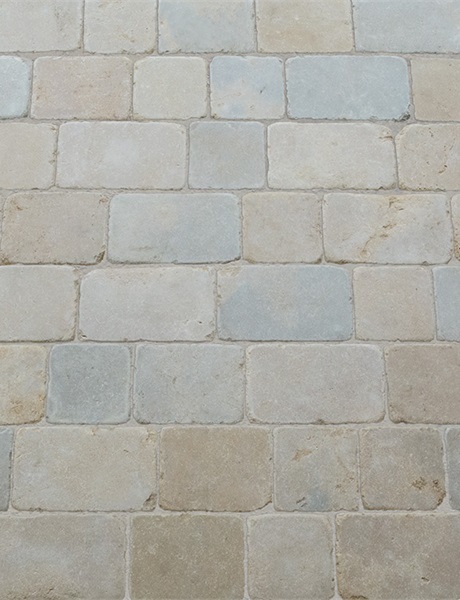
Today, a clear shift is underway as designers, architects, and builders increasingly specify natural stone for residential and commercial driveway systems. As dated, stain-prone concrete surfaces are replaced, natural stone stands out for its versatility—available in classic 4”×4” and 6”×6” cubes as well as larger formats. With proven structural performance and timeless aesthetics, stone driveway pavers offer a refined, high-value alternative to conventional concrete pavers.
Let’s explore the technical factors architects and builders should consider when selecting natural stone for driveway applications.
Driveway Stone Pavers Deliver Strength, Durability, and Visual Impact
Several stressors negatively impact all driveway systems. The combination of these three major durability stressors influences the lifespan of the driveway installations:
- The vehicle’s load stress on a driveway system (flexural strength)
- Environmental factors such as freezing and thawing
- Driveway installation methodologies and technologies
Now, with driveway stone pavers, architects and builders can work around these concerns. Start by selecting the appropriate stone with these stressor considerations in mind. Then choose the aesthetic for your natural stone application.
Road builders have selected porphyry and granite cubes as the typical natural stone materials used to endure vehicle traffic for thousands of years. The common cube size of 4”x4”x4” provides the necessary strength and the flexibility to create many designs and patterns. Larger formats produce even different visuals. But the size of the stone dictates the installation methodology. See our blog, DRIVEWAY INSTALLATION: BEST PRODUCTS (AND TECHNOLOGIES) FOR LIFETIME VALUE
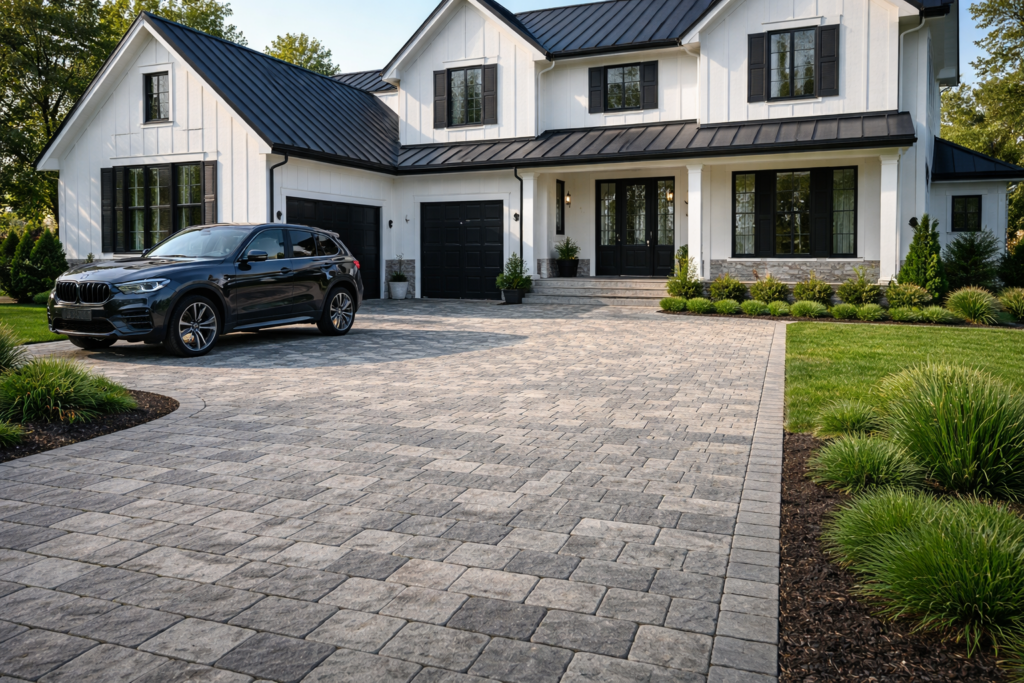
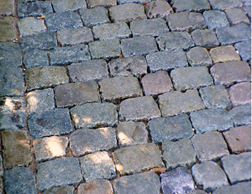
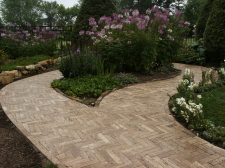
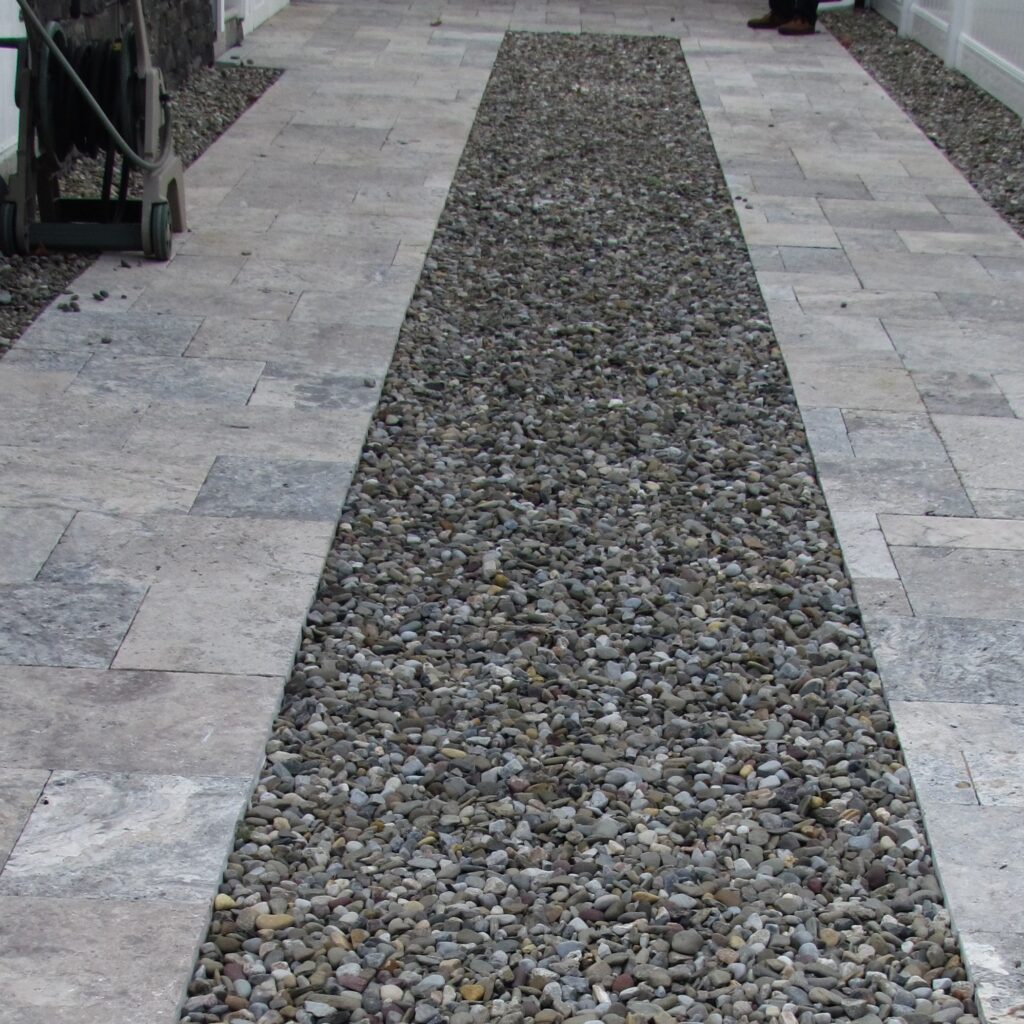
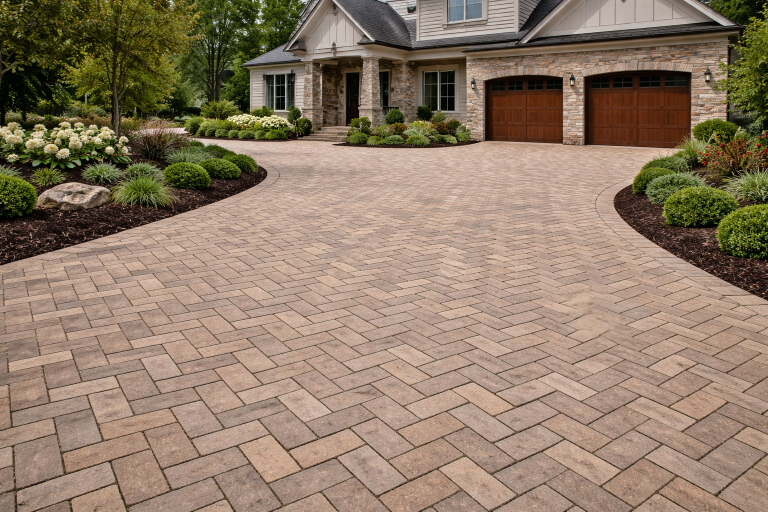
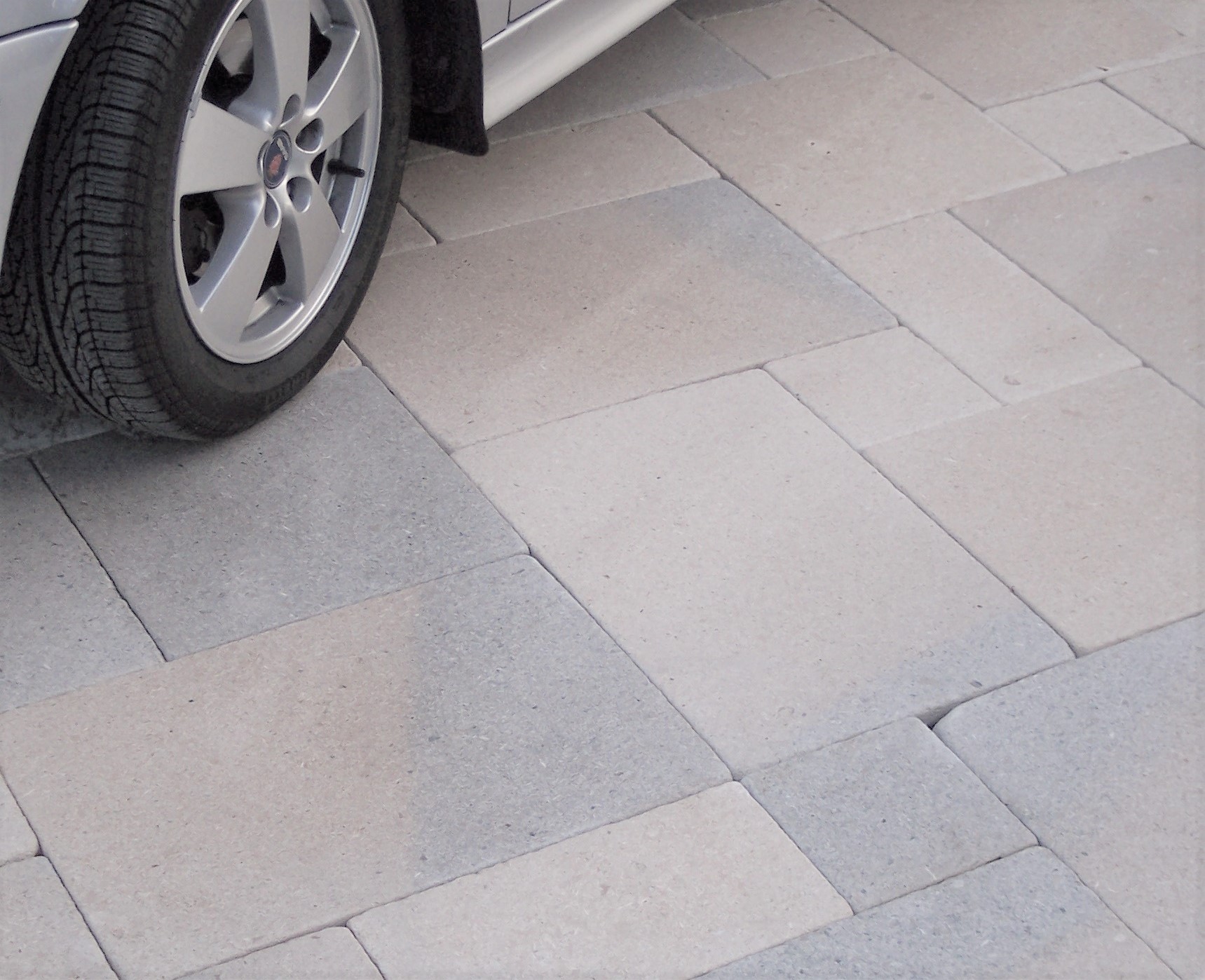
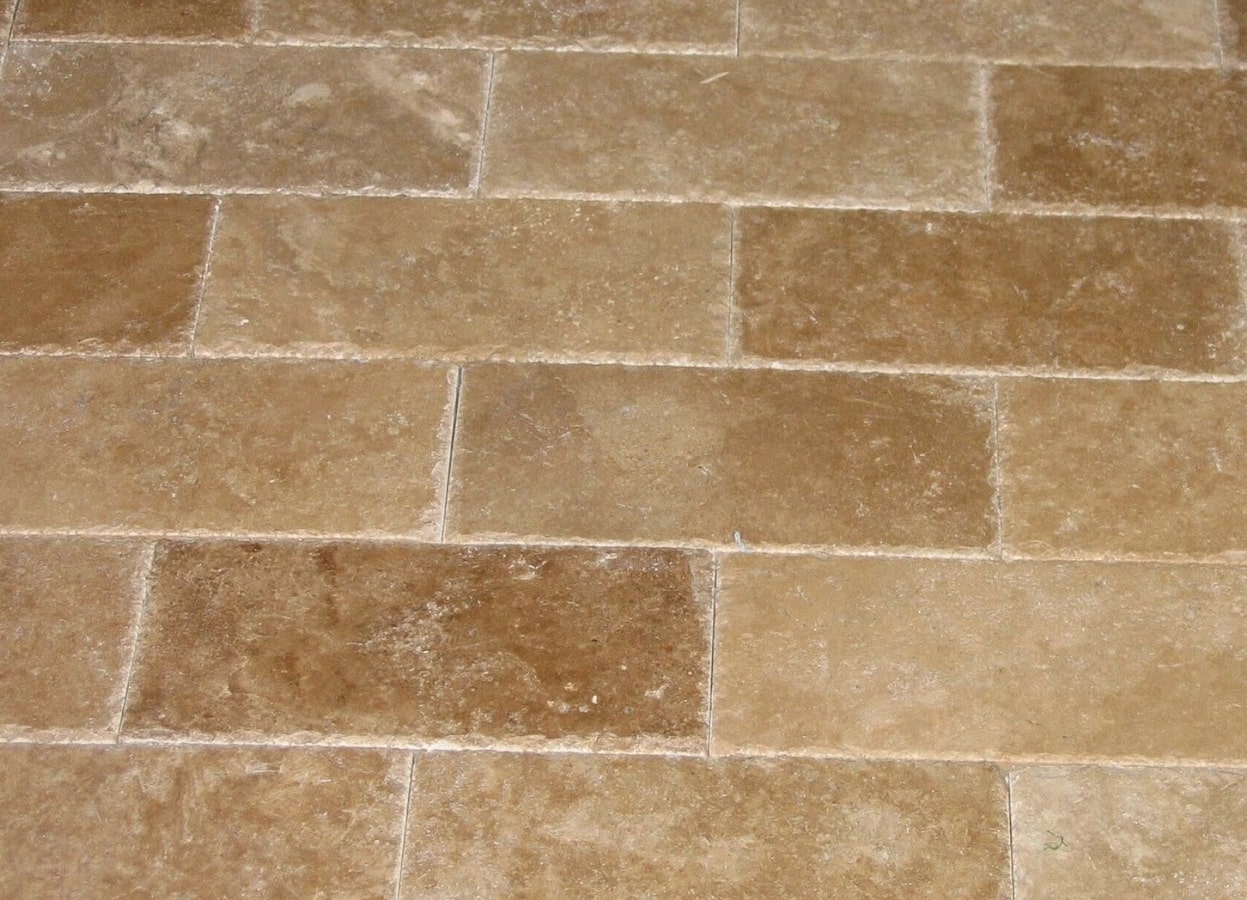
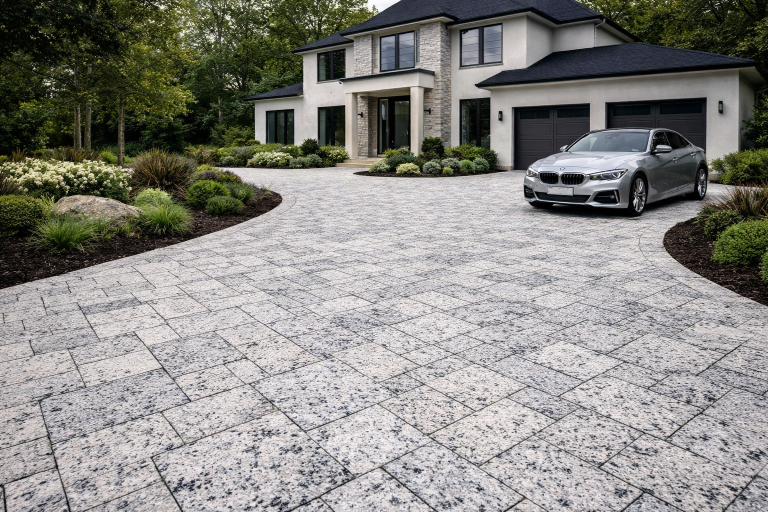
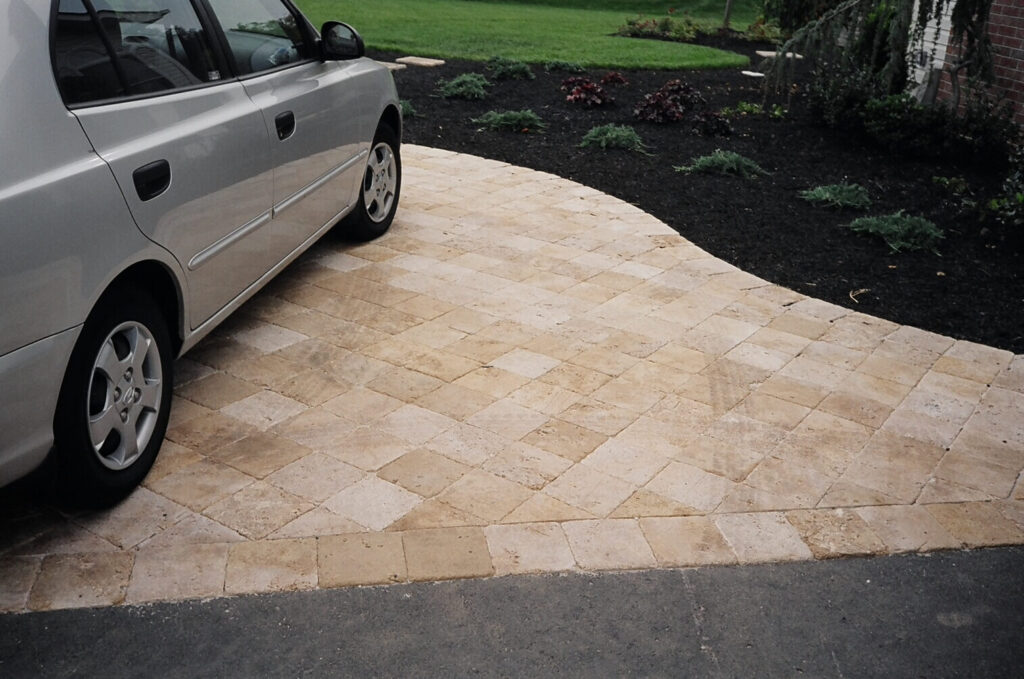
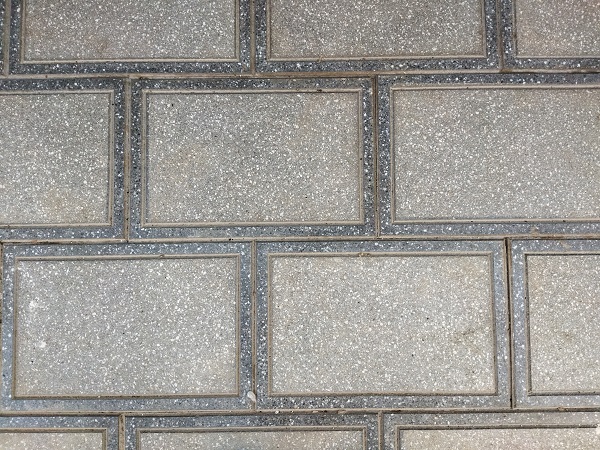
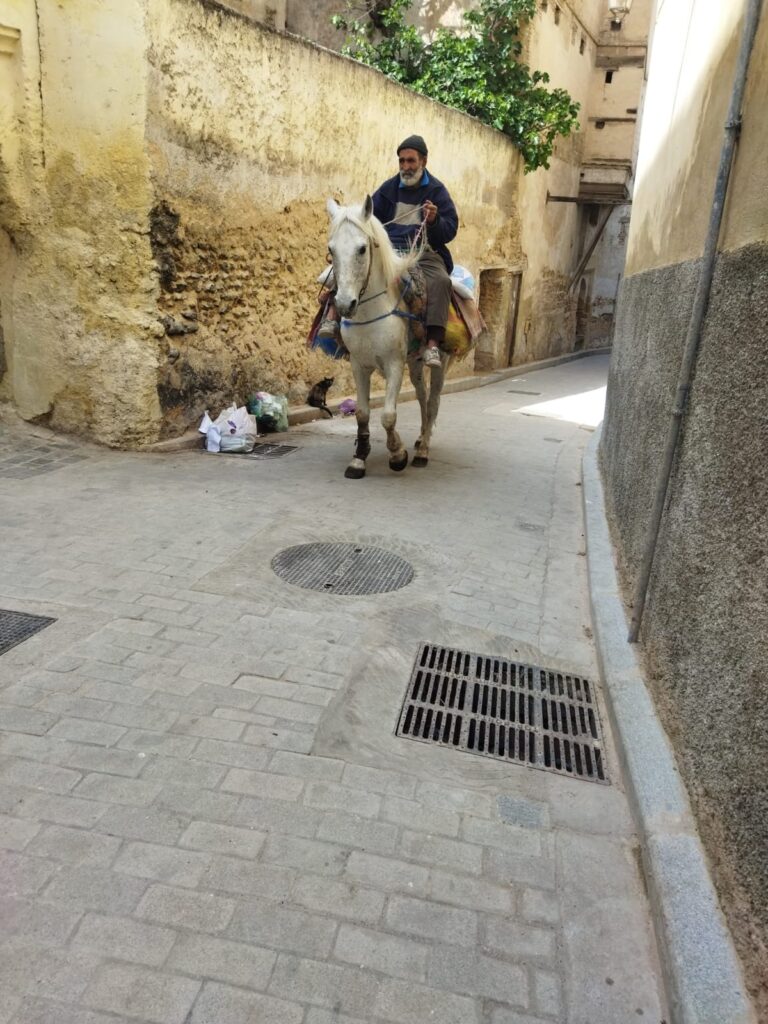
systems for businesses or residences, delivering that “wow factor” and adding value to the property.
Start with Flexural Strength
The compressive strength of most stones more than meets this application’s requirements, so flexural strength becomes the primary consideration. The thickness of the stone increases the flexural strength, while compressive strength remains static.
If the stone surface exceeds 6 inches in any one direction, a strong (high ‘flexural strength’) material is optimal, particularly for a ‘dry set’ application. Avoid stones prone to having natural fissures or clefting, in some instances. For example, most types of marble and travertine are extremely durable and very appropriate for this type of application. Yet, seismic activity negatively impacted some individual quarries thousands or even millions of years ago, resulting in fissures in the stone. This may cause premature failure later. Be sure to purchase your stone from a reputable supplier with a history of working directly with the source quarries.
Regarding ‘compressive strength’ (an important consideration for both ‘dry set’ and ‘wet set’ applications), most stones on the market are at a minimum of 2,500–3,000 psi ‘compressive strength’, so it’s typically not much of a concern. Check with the distributor of the stone to be sure you choose an appropriate material for your specific application and environmental conditions.
Work with the Environment
When selecting driveway stone, it’s important to consider these environmental factors.
- Local temperatures & seasonality – extreme cold and/or heat plus heavy rains and flooding should influence your choices. For example, some stones are not considered frost-proof, such as coral stone and other exceptionally soft stones.
- The propensity for staining (foliage, oil deposits, and tire track staining) – some stones may be too porous or light in color for driveways. However, with the proper impregnating sealer, this problem can be mitigated.
- Coefficient of friction – Always select a non-slip finish for the surface treatment/surface finish. We recommend bush hammer/chisel face surface finish as the best overall for driveways. See all our surface finishes and select the best option for your application.
Identify the Driveway Installation Methodologies & Technologies
Environmental considerations such as code limitations regarding pervious/impervious surfaces (crucial consideration), slope/drainage, soil type, and flexural strength/size of stone dictate driveway stone installation methods.
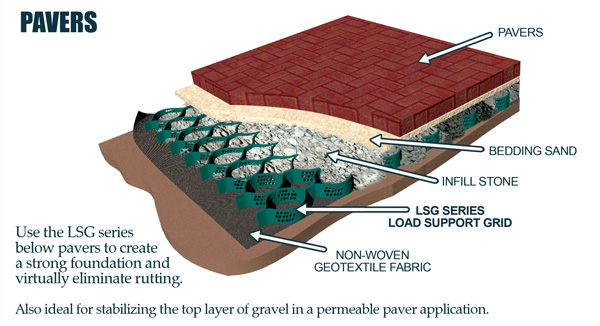
Typically, you have two basic choices for natural stone driveway installations: either ‘dry set’ or wet set. Gothicstone recommends that a Cellular Confinement System (CCS) be utilized in the installation of the subbase for optimum longevity and lifetime value. When considering methods of installation, there are aesthetic differences between ‘wet set’ and ‘dry set’; most notably, the need for expansion joints when installing on a concrete slab. Expansion joints can detract from the natural beauty of the driveway stone.
The critical distinction between the two common methods:
- ‘Wet set’ dictates the pavers being cemented to a concrete base.
- ‘Dry set’ allows the pavers to ‘float’ on top of a compacted aggregate base.
Dry-Set Installation
Dry-set avoids the failure/cracking attributed to freeze-thaw heaving in cold climates, and expansion and contraction in hot or cold climates, and combinations thereof. An environmentally sustainable alternative, this installation allows water to pass through it or “percolate.” This has become a hot-button issue for most municipalities and zoning regulators regarding water runoff.
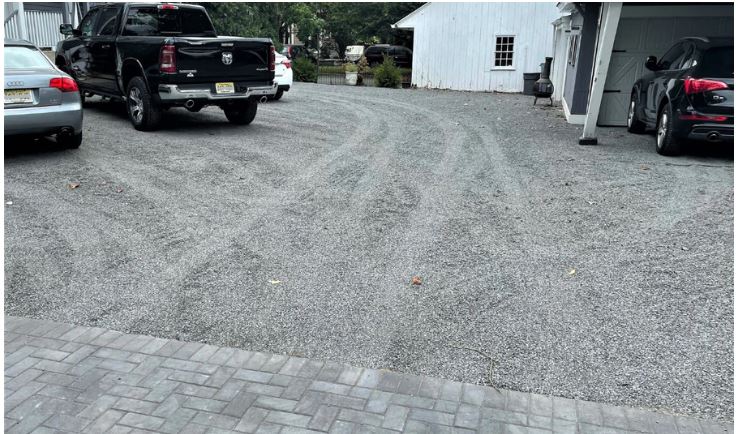
While we recommend CCS systems for all patios, driveways, pool decks, or any installation that utilizes gravel in the subbase, driveway projects particularly benefit from CCS because of the uneven distribution of vehicle tire track load.
For more information on dry-set installation, see our blog, DRIVEWAY INSTALLATION: BEST PRODUCTS (AND TECHNOLOGIES) FOR LIFETIME VALUE.
Wet-Set Installation
Wet-set installation is an option, but not the best option in climates with heavy freeze-thaw cycling. Often, failure, in the form of cracking, can occur in the concrete base. Invariable, these cracks transfer through to the surface material, causing an unsightly appearance resulting in costly repairs. Conversely, cracks in the slab can be mitigated by the implementation of appropriate separation membranes such as Schluter®-DITRA & DITRA-XL. So, if you’re in a freeze-dry environment, skip the ‘wet set’ method and look at the ‘dry set’ (floating paver system).
To learn more about these driveway system installation methods and advantages, see our blog, DRIVEWAY INSTALLATION: BEST PRODUCTS (AND TECHNOLOGIES) FOR LIFETIME VALUE.
Other resources that may be helpful in your planning:
- Granite & Silverback Limestone Driveway Pavers
- Considerations for specifying natural stone in residential/commercial vehicle applications
- Why We Recommend Stabilization Grids No Matter the Scale of Your Paver Project
- https://www.celltekdirect.com/
- https://usenaturalstone.org/the-natural-stone-advantage/
- https://homeguide.com/costs/driveway-pavers-cost#stone